
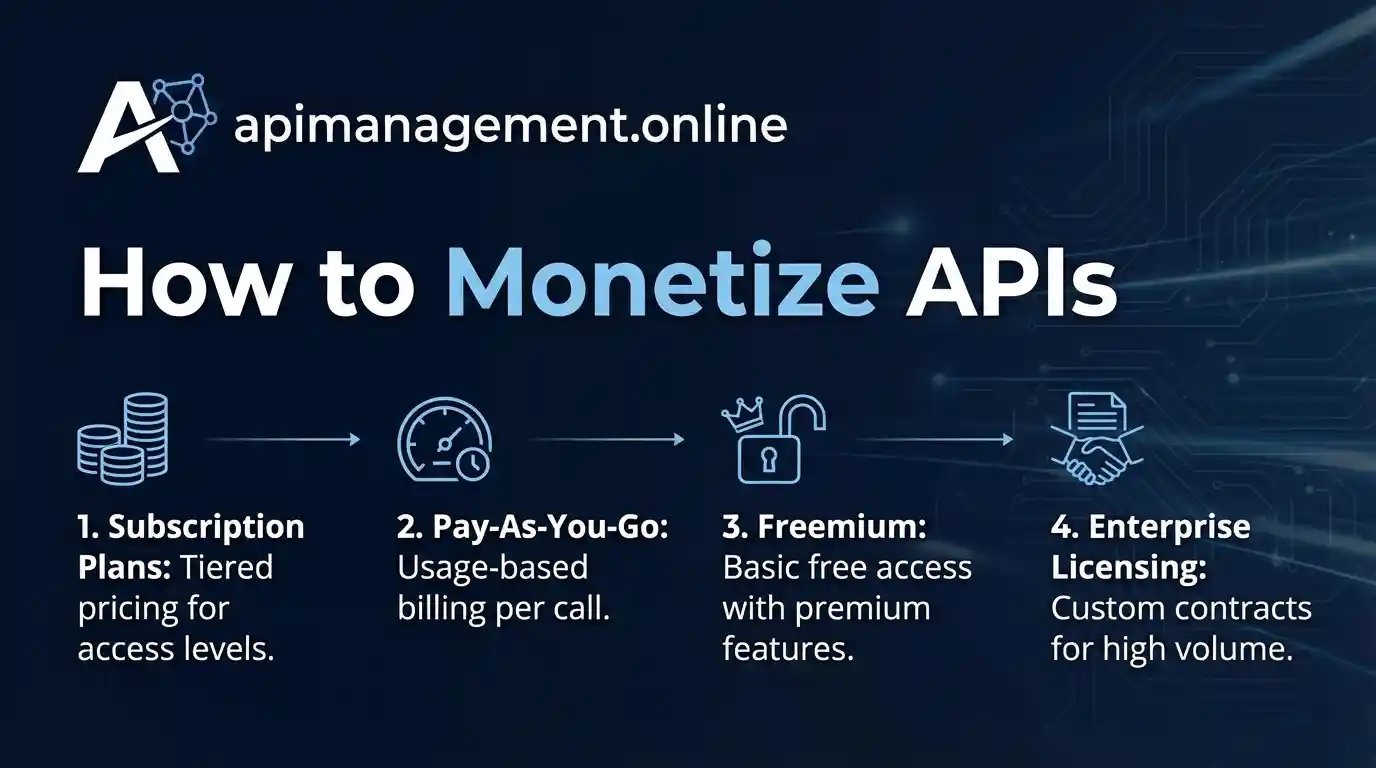
In 2026, understanding how to monetize APIs has become the cornerstone of digital business strategy for SaaS companies and enterprises alike. As the API economy continues to expand, transforming internal data into a revenue-generating asset requires a sophisticated API management platform capable of usage-based billing, tiered access, and seamless payment integration. Whether you are building a developer ecosystem or exposing B2B data services, a formalized API monetization model ensures your digital infrastructure remains sustainable, secure, and highly profitable.
The “API-as-a-Product” movement has fundamentally shifted the perception of Application Programming Interfaces from technical utilities to commercial assets. Companies like Stripe, Twilio, and SendGrid have proven that the gateway to a billion-dollar valuation is often found at the endpoint. However, simply exposing an API is not enough to generate revenue. You need a strategy that balances developer adoption with business value.
Monetizing an API involves more than just putting up a paywall. It requires a deep understanding of your target audience, a robust developer portal for onboarding, and an infrastructure that can accurately meter and bill for every request. In this guide, we explore the most effective monetization models for 2026 and the tools you need to implement them.
Common API Monetization Models
Before selecting your tooling, you must define your commercial structure. The following models are currently dominating the market in 2026:
1. Usage-Based (Pay-As-You-Go)
This is the most transparent model. Users are charged for exactly what they consume (e.g., $0.01 per successful API call). Why it works: It lowers the barrier to entry for small developers while ensuring massive enterprises pay their fair share based on the load they put on your infrastructure.
2. Tiered Subscription (SaaS Style)
Similar to standard SaaS billing, you offer various tiers (e.g., Bronze, Silver, Gold). A “Bronze” tier might offer 10,000 requests per month for $49, while “Gold” offers unlimited requests for $999. Why it works: It provides predictable monthly recurring revenue (MRR) for your business and predictable costs for your customers.
3. Freemium Model
You offer a limited number of requests for free (e.g., 1,000 per month) to encourage adoption. Once the user exceeds the limit, they must upgrade to a paid tier. Why it works: It acts as your primary marketing engine, allowing developers to build Proof of Concepts (PoC) without financial friction.
The Infrastructure of Monetization
To monetize successfully, your API gateway must handle the “Business Logic” of the request. This involves more than just routing traffic; it involves metering and enforcement.
1. Metering and Analytics
You cannot bill for what you cannot measure. Your gateway must log every successful request and associate it with a specific API-Key or JWT. In 2026, leading platforms use OpenTelemetry to stream these usage metrics to a billing engine in real-time. This allows for live dashboards where customers can see their current month’s spend.
2. Quota Enforcement (Throttling)
If a customer is on a “Bronze” plan and hits their 10,000-request limit, your gateway must be smart enough to return a 429 Too Many Requests status code. This prevents “revenue leakage” where customers consume more than they pay for.
3. The Developer Portal
This is your “Self-Service Storefront.” A mature monetization strategy requires a portal where developers can sign up, enter their credit card details (integrated via Stripe or Adyen), and receive their production API keys. In 2026, the OpenAPI Specification is used to auto-generate the documentation that lives on this portal.
Monetization Security: Protecting Your Revenue
When you put a price tag on your endpoints, the incentive for fraud increases. Your API security strategy must be airtight to prevent “theft of service.”
- Credential Stuffing Protection: Use your gateway to block bots trying to guess API keys.
- Request Validation: Ensure users are not manipulating query parameters to bypass billing filters.
- Signed Payloads: For high-value transactions, use cryptographic signatures to ensure the request truly came from the paying subscriber.
Our Commitment to Technical Truth
API Management Online is a dedicated resource built to simplify complex infrastructure decisions. To maintain our role as a trusted partner, we operate with full transparency:
- No Product Sales: We are strictly an educational blog. We do not sell API gateways, software, or monetization consulting. We will never ask for your credit card or PayPal details.
- Analytics Usage: We utilize Google Analytics to monitor aggregated, anonymized traffic. This data tells our editorial team which monetization topics our readers find most helpful.
- Display Advertising: To cover our hosting and research costs without paywalls, we display programmatic ads using Google Ads. Third-party vendors use cookies to serve ads based on your digital footprint. You can opt-out at any time via your Google settings.
Have questions about setting up a billing tier for your API? Contact Ishfaq directly via our Contact Page.
Frequently Asked Questions (FAQ)
What is the best pricing model for a new API?
The “Freemium” model is generally best for new APIs. It allows you to build a developer community first. Once you see significant adoption, you can introduce a “Pro” usage-based tier for high-volume users.
How do I handle billing for slow API responses?
Many companies only bill for successful 2xx status codes. Charging users for 5xx server errors can lead to disputes. Transparent billing is the foundation of a successful API business.
Do I need a custom billing system?
No. In 2026, it is highly recommended to use a specialized billing provider (like Stripe or Chargebee) that integrates with your API gateway via webhooks. Building a PCI-compliant billing system from scratch is an unnecessary risk.
How do I prevent users from sharing API keys?
While you cannot perfectly stop sharing, you can enforce IP Allowlisting or use OAuth 2.0 with short-lived tokens. Additionally, if your billing is usage-based, the financial incentive to share keys is greatly reduced.